Hospital Water Treatment Program Modernized
Written by Micheal Dodson
Snapshot of Success
A major regional hospital partnered with Garratt-Callahan to improve water efficiency, reduce operational costs, and support safer facility operations across its boiler, cooling tower, and domestic water systems.
Industry: Healthcare
Challenge: Rising utility costs, inefficient water usage, operator safety concerns, and cooling tower biofilm risks were increasing operational pressure across critical facility systems
Solution: Automated boiler and cooling tower controls + solid chemistry conversion + biofilm control program + corrosion monitoring
Results: Approximately 5 million gallons of annual water savings, improved condensate recovery, reduced operator exposure risks, and more than $100,000 in estimated annual operational savings
Why This Success Matters: Health care facilities face growing pressure to improve operational efficiency while supporting safe water management practices, infrastructure reliability, and evolving compliance expectations tied to building water systems.
The Risk To Efficiency & Safe Operations
The hospital’s boiler and cooling water systems were experiencing inefficiencies that increased operational costs and created avoidable risks for staff and infrastructure.
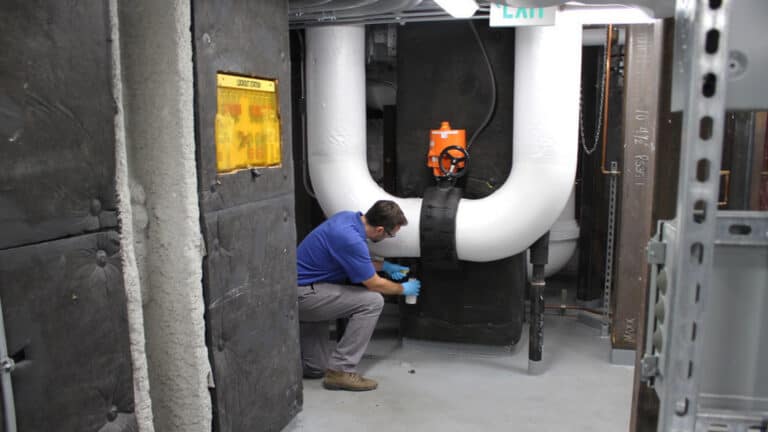
Manual boiler blowdown practices caused unnecessary water and energy loss, while biofilm buildup in cooling towers reduced system efficiency and raised broader concerns around water quality management in a health care environment. Traditional liquid chemical programs also created handling, storage, and disposal challenges for facility staff.
With rising utility and material costs, the hospital needed a more proactive approach to improve efficiency, reduce operational risk, and support long-term system reliability.
Health Care Water Treatment Improvements
Before
After
Inconsistent Boiler Blowdown
Manual processes contributed to unnecessary water and energy loss
Automated Boiler Controls
Surface blowdown automation improved cycle management and reduced wasted energy
Biofilm & Cooling Efficiency Concerns: Cooling towers were susceptible to biofilm buildup that reduced efficiency and increased operational risk
Improved Cooling Performance: Implementation of Formula 9810 helped reduce biofilm buildup and maintain heat-transfer efficiency
Operator Safety Challenges: Traditional liquid chemistry programs required handling heavy chemical drums and increased operator exposure concerns
Safer Chemical Handling: Transitioning to SolidTrac solid chemistry reduced operator handling risks and eliminated heavy liquid drums
Rising Utility Costs: Water, fuel, and operational costs continued increasing while efficiency opportunities remained unaddressed.
Measurable Operational Savings: Cooling tower optimization and condensate recovery improvements significantly reduced water and energy waste
How We Solved It
Garratt-Callahan implemented a phased “Standards of Excellence” approach to improve operational efficiency and support safer facility management practices.
- Installed Automated Surface Blowdown Controls – Automated boiler controls improved cycles of concentration and reduced unnecessary energy and water loss.
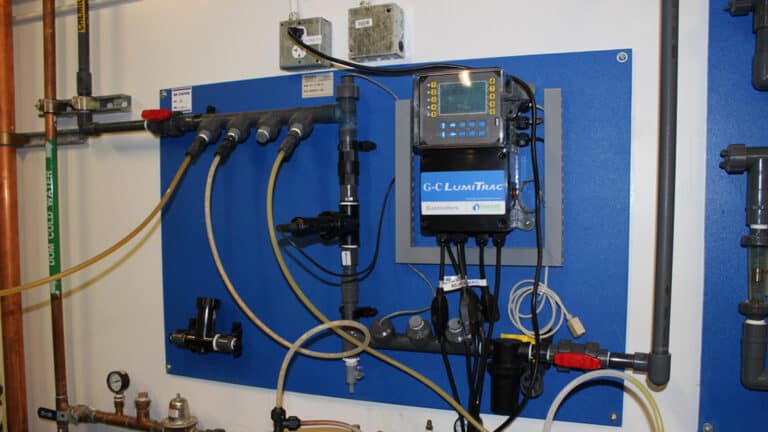
- Added Smart Metering Technology – Cooling tower and surge tank monitoring allowed chemistry feed rates to adjust based on actual system volume rather than fixed assumptions.
- Implemented Solid Chemistry Treatment – The facility transitioned to solid chemistry technology to reduce handling risks, simplify storage requirements, and lower freight and disposal costs.
- Improved Biofilm & Corrosion Control – We introduced bio-dispersant treatment and corrosion monitoring programs to improve cooling system efficiency and protect critical infrastructure.
- Developed Long-Term Asset Preservation Strategies – Our recommendations included side-stream filtration and future reverse osmosis initiatives to further improve system performance and sustainability.
Applying These Insights to Other Health Care Facilities
Hospitals and health care facilities operate under constant pressure to improve efficiency without compromising reliability or safety. This project demonstrates how operational improvements in water treatment can reduce utility costs, conserve resources, and support safer facility operations simultaneously. Small improvements in areas such as condensate recovery, cooling efficiency, and chemical handling can create substantial long-term operational value in complex health care environments.
The partnership also established a framework for ongoing optimization and future infrastructure improvements focused on sustainability and long-term asset performance.
Combining automation, safer chemistry management, and proactive monitoring helped the facility reduce operational costs while improving system reliability and staff safety.
Take The Next Step
Looking to improve operational efficiency while supporting safer water system management in your health care facility? Together we'll:
- Identify opportunities to improve water, energy, and chemical efficiency
- Improve system performance through automation and proactive monitoring
- Support safer operations with practical water treatment, asset-preservation strategies, and evolving water management expectations
Solve Your Water Treatment Challenges
Rely on Garratt-Callahan’s 100+ Years of Water Treatment Expertise